












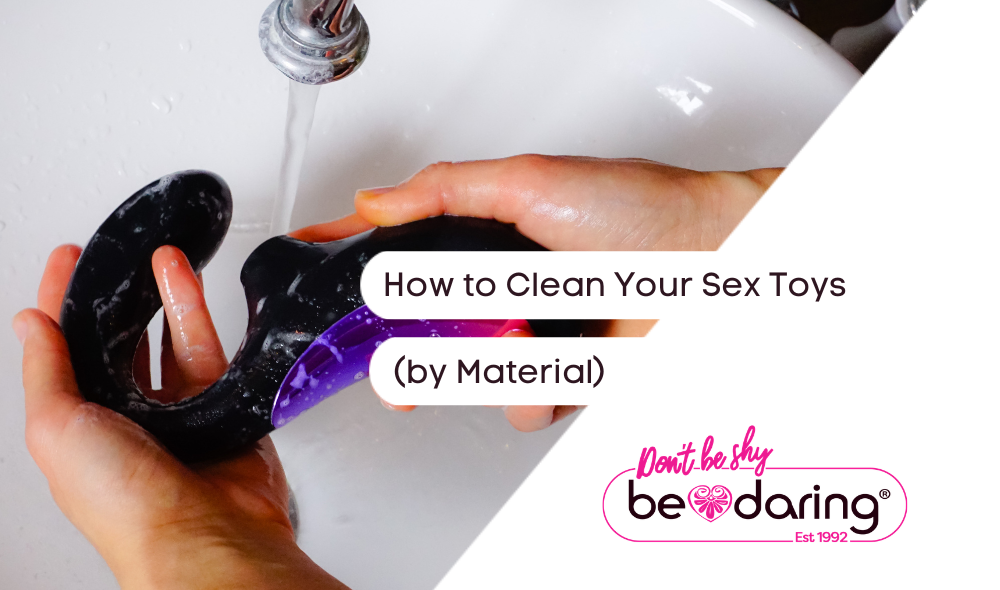
Sex toys are an investment in pleasure, comfort, and sexual wellbeing, so it makes sense to look after them properly.
Most people understand that toys should be cleaned after use, but many don’t realise that different materials require different cleaning methods. What works perfectly for a glass dildo may not be suitable for a rechargeable vibrator, while some materials need a little more attention than others to stay hygienic and in good condition.
The good news is that cleaning your toys doesn’t need to be complicated. Once you understand what your toys are made from, keeping them clean becomes a quick habit that helps protect your health and extend the lifespan of your collection.
In this guide, we’ll walk through the most common sex toy materials, explain how to clean them safely, and share some practical tips for storage and ongoing care.
Why Proper Toy Hygiene Matters
Cleaning your toys isn’t just about appearances.
Regular cleaning helps:
- Reduce bacteria and residue build-up
- Protect sensitive skin and intimate areas
- Prevent unwanted odours
- Extend the life of your toys
- Maintain the quality of materials and finishes
Good toy hygiene is an important part of sexual wellness. In fact, understanding what sexual health toy hygiene is can help you build safer and healthier intimate habits overall.
First Things First: Check the Manufacturer’s Instructions
Before cleaning any toy, always take a moment to check the manufacturer’s recommendations.
Many modern toys contain rechargeable batteries, charging ports, motors, waterproof seals, or specialised coatings. Following the manufacturer’s cleaning advice helps ensure you’re cleaning effectively without causing accidental damage.
A waterproof vibrator, for example, can often be rinsed under running water, while a splashproof model may need to be wiped down more carefully.
How to Clean Silicone Sex Toys
Silicone is widely considered one of the best materials for sex toys because it’s body-safe, durable, non-porous, and easy to maintain.
For most silicone toys:
- Wash with warm water and mild soap.
- Rinse thoroughly.
- Allow the toy to air dry completely.
- Store it somewhere clean and dry.
Because silicone is non-porous, it doesn’t absorb moisture or bacteria in the same way softer materials can.
Many premium vibrators, dildos, butt plugs, and prostate massagers are made from silicone for this reason.
Looking After Silicone Vibrators
Many people focus on cleaning but forget about ongoing maintenance. If you own rechargeable toys, learning how to care for your vibrator can help maximise both performance and longevity.
How to Clean Glass Sex Toys
Glass sex toys are surprisingly simple to clean.
High-quality borosilicate glass is non-porous, smooth, and highly resistant to staining.
To clean glass toys:
- Wash with warm water and mild soap
- Rinse thoroughly
- Dry with a clean towel or allow to air dry
One of the reasons many people choose glass toys is because they are so easy to maintain. If you’re curious about their benefits, our guide to glass sex toys and dildos explores why they’ve become increasingly popular among both beginners and experienced users.
How to Clean Stainless Steel Toys
Like glass, stainless steel is non-porous and highly durable.
Cleaning usually involves:
- Warm water
- Mild soap
- Thorough rinsing
- Complete drying
Because stainless steel doesn’t absorb moisture, it’s one of the easiest materials to keep hygienic.
Always inspect metal toys periodically for scratches, dents, or damage that could affect comfort during use.
How to Clean ABS Plastic Toys
ABS plastic is commonly used in:
- Bullet vibrators
- Wand vibrator handles
- Remote controls
- Hard-shell toys
Cleaning ABS plastic is straightforward:
- Wipe with warm soapy water
- Avoid submerging non-waterproof devices
- Dry thoroughly before storing
Pay particular attention to charging ports, seams, and buttons where moisture can sometimes collect.
Understanding Porous Materials
Some toys are made from materials such as:
- TPE
- TPR
- Jelly rubber
- Soft rubber compounds
These materials are considered porous, meaning they contain microscopic openings that can trap bacteria, oils, and moisture over time.
If you own porous toys:
- Clean immediately after use
- Allow them to dry completely
- Store them carefully
- Replace them if they become damaged, sticky, or develop persistent odours
Many experienced toy users eventually upgrade to silicone, glass, or stainless steel because they’re easier to maintain and typically last much longer.
How to Clean Anal Toys Properly
Anal toys deserve a little extra attention when it comes to hygiene.
Because anal toys come into contact with different bacteria than toys used elsewhere, they should always be cleaned thoroughly after every use.
This includes:
- Butt plugs
- Anal beads
- Prostate massagers
- Anal dildos
Warm water and mild soap are usually sufficient, but textured toys may require additional attention around grooves and ridges.
For a more detailed breakdown, our guide on how to properly clean anal toys covers cleaning techniques for different types of anal products.
Don’t Forget About Storage
Cleaning is only half the job.
Once your toys are clean and dry, proper storage helps prevent dust, moisture, and material damage.
Good storage habits include:
- Keeping toys out of direct sunlight
- Avoiding humid environments
- Storing toys separately where possible
- Using storage bags or dedicated cases
- Ensuring toys are completely dry before packing them away
Poor storage can shorten the lifespan of even the highest-quality products.
If privacy is a priority, there are also several discreet ways to hide your sex toys while keeping them organised and protected.
Common Cleaning Mistakes to Avoid
Even experienced toy owners occasionally make mistakes.
Some of the most common include:
Using Harsh Household Cleaners
Bleach, abrasive cleaners, and strong disinfectants can damage toy materials and irritate sensitive skin.
Storing Toys While Damp
Moisture trapped during storage can encourage mould, mildew, and unpleasant odours.
Assuming Every Toy Is Waterproof
Always check the manufacturer’s specifications before rinsing electronic toys.
Ignoring Material Compatibility
Some materials can react when stored together, particularly silicone products.
Forgetting Regular Inspections
Cleaning is also a great opportunity to inspect toys for wear, cracks, or damage.
When Is It Time to Replace a Toy?
Even well-maintained toys eventually reach the end of their lifespan.
Consider replacing a toy if you notice:
- Cracks or tears
- Sticky surfaces
- Persistent odours
- Material degradation
- Broken charging components
- Visible damage that cannot be cleaned away
If a toy can no longer be cleaned effectively, replacement is usually the safest option.
Frequently Asked Questions
How often should I clean my sex toys?
Sex toys should be cleaned after every use. If they’ve been stored for a long time, a quick clean before use is also recommended.
Can I use regular soap to clean sex toys?
Yes. Mild, unscented soap and warm water are suitable for most toy materials.
Do I need a dedicated toy cleaner?
Not always, but many people appreciate the convenience and added peace of mind that toy cleaners provide.
Which materials are easiest to clean?
Silicone, glass, and stainless steel are generally considered the easiest materials to maintain.
Can I store different toys together?
It’s usually better to store toys separately, particularly silicone products, to help prevent material interactions and surface damage.
How do I know if my toy is waterproof?
Check the manufacturer’s instructions. Water-resistant and waterproof are not the same thing.
Whether you’re completely new to sex toys or looking after a growing collection, please feel free to drop into one of our stores or drop us a note and we’ll get back to you as quickly as possible.